Your Long-Term Care Premiums May Be Tax‑Deductible. Know Before December 31.
In one free 30‑minute Family Care Plan Review, a licensed long-term care specialist shows you which coverage can qualify for tax benefits, then compares traditional, hybrid, and annuity-based options side by side for your age, health, and budget.
And you’ll see why someone age 61 to 70 can count up to $4,960 of tax-qualified premiums in 2026,1 and the routes that can work even if you don’t clear the 7.5% medical-expense floor.2
Claim my free 30-minute reviewFree. No obligation. A licensed professional responds within 1 business day.
- 45+ years in long-term care insurance
- CLTC® & LTCP designations
- Genworth BGA partner, 2000–2016
- Florida DFS approved CE instructor
The tax benefit many long-term care policyholders never use
Premiums for a tax-qualified long-term care policy count as a medical expense, up to an age-based limit the IRS sets each year.1
But if you itemize, medical expenses only help once they add up to more than 7.5% of your adjusted gross income.2 So many policyholders assume the benefit doesn’t apply to them and stop there.
The itemized deduction isn’t the only route. Health savings accounts and self-employed deductions work differently.
If you have a health savings account, you can use it to pay long-term care insurance premiums, up to the same age-based limits.3 If you’re self-employed, you may be able to deduct eligible premiums without itemizing.2 A tax professional can tell you which applies to you.
How much long-term care premium can count in 2026
The IRS limit depends on your age at the end of the year and applies to each insured person:1
Limits apply only to tax-qualified long-term care policies. For a married couple, each spouse has their own limit. Educational information only, not tax advice; talk with your tax professional about your situation.
Four year-end mistakes with long-term care premiums
- “I’m sure my policy counts.” Only tax-qualified policies count, and many people have never checked which kind they own. Your review will tell you.
- “I don’t itemize, so it doesn’t matter.” HSA dollars can pay eligible long-term care premiums tax-free, whether or not you itemize.3
- “Self-employed rules are the same as everyone else’s.” Self-employed people may be able to deduct eligible premiums without itemizing.2
- “I’ll deal with it in April.” Medical expenses generally count in the year you pay them. A premium paid in January counts toward next year, not this one.
The tax benefit doesn’t make coverage free, but it can change the real cost. That’s worth knowing before you choose a policy, and before December 31.
The Three-Path Comparison: every type of coverage, side by side, in one conversation
Instead of one product from one company, your Family Care Plan Review looks at all three ways to pay for care. We compare them across insurers for your age, health, and budget, then show you the trade-offs in plain English.
Path 1: Traditional long-term care insurance
Medically underwritten coverage that pays a daily or monthly benefit once you need help with daily activities.
Often the most coverage for the premium for healthy applicants 45 to 65.
How it’s underwritten →Path 2: Hybrid (asset-based) coverage
Life insurance with a long-term care benefit. If you never need care, the death benefit still goes to your family.
Popular with couples who want their money to work either way.
How it’s underwritten →Path 3: Annuity care
A deferred annuity paired with long-term care benefits that can be larger than the deposit, often funded from existing savings.
An option to explore when health makes other coverage harder to get.
How it’s underwritten →More than four decades of helping families plan for care
George A. Mellendorf founded Central States Insurance Services in Ft. Myers in 1981. It grew into a national long-term care insurance brokerage, and from 2000 to 2016 it served as a Brokerage General Agent for Genworth, at the time one of the largest long-term care insurers in the country.
- CLTC (Certified in Long-Term Care) and LTCP (Long-Term Care Professional) designations
- Approved continuing-education instructor on the Florida Department of Financial Services registry (Instructor ID #737925), teaching other licensed agents
- Florida licensed insurance agent, License # A175981. Verify the license
“When I first started in the ‘nursing home insurance’ business in 1981, the average age was 74. Today we are down to the mid-50s and early 60s.”
George A. Mellendorf · Read his story
Thirty minutes from now, you could know exactly where you stand
- Peace of mind for your children. A plan that keeps them in the role of family, not full-time caregiver.
- A clear answer to “what would it cost us?” Real numbers for your age and health, not a generic rate sheet.
- Confidence you didn’t overpay. In 2026, the highest price for virtually identical coverage was 56% above the lowest.4 Comparing is how you avoid that gap.
- Your savings and home protected from being drained by years of care costs.
- Choices about where you get care, at home, in assisted living, or in a nursing home.
- A decision made calmly, on your schedule, instead of in a hospital hallway after a diagnosis.
Your free Family Care Plan Review
A 30-minute conversation with a licensed long-term care specialist. Even if you never buy a policy, you’ll leave knowing your options, what they cost, and what to ask.
- The review
Your Three-Path Comparison
Traditional, hybrid, and annuity-based coverage compared across insurers for your age, health, and budget, with the trade-offs explained in plain English.
 Bonus 1
Long-Term Care Insurance Buyer’s Guide
The three coverage types, the riders worth paying for, how underwriting sets your rate, and how to compare quotes side by side.
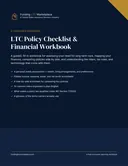 Bonus 2
LTC Policy Checklist & Financial Workbook
Fill it in before your review so you know your budget, your assets, and the questions to ask.
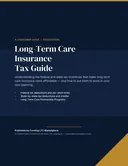 Bonus 3
Long-Term Care Tax Guide
How long-term care premiums may be tax-deductible, so you can factor that into the real cost.
No cost and no obligation to buy anything.
Two deadlines: December 31 and your next birthday
Premiums generally count toward the tax year in which you pay them, so December 31 matters if you want to use this year’s limit.
Your health matters even more. Long-term care insurance is medically underwritten, and every birthday moves you into an older rate band. A new diagnosis can raise the price or take options off the table.
A 30-minute review before the year ends gives you real numbers to bring to your tax professional.
Free to compare. Free to say no. Protected if you say yes.
The review costs nothing, and you’re never under any obligation to buy.
If you do choose a policy, Florida law gives individual long-term care insurance policyholders 30 days after delivery to review it and return it for a full premium refund, for any reason.6
Four simple steps, and you’re in control at every one
- Send the short formName, contact details, and a few quick questions. About two minutes.
- We call to scheduleA licensed specialist contacts you within 1 business day to pick a time that works.
- Your 30-minute reviewBy phone. We go over your goals, health, and budget, and compare all three paths.
- You decideTake the side-by-side comparison home, talk it over with family, and choose, or don’t.
Prefer to talk now? Call (239) 218-7309.
Before you request your review
Is the review really free? What’s the catch?
Yes, it’s free and there’s no obligation. You’ll get a side-by-side comparison you can keep, whether or not you buy anything.
Will I be pressured to buy?
No. The goal of the review is for you to understand your options. Many people take the comparison home and talk it over with their family first.
Are long-term care insurance premiums tax-deductible?
Premiums for tax-qualified policies count as a medical expense, up to an age-based limit. For 2026, the limits range from $500 to $6,200 per person.1 If you itemize, only medical expenses above 7.5% of adjusted gross income are deductible.2
Can I pay long-term care premiums from my HSA?
Yes. Long-term care insurance is one of the few types of insurance an HSA can pay for, up to the same age-based limits.3
Are hybrid policies tax-qualified?
It depends on how the policy is built. Some hybrid policies treat only part of the premium as long-term care premium, and some don’t qualify at all. We’ll show you how each option is treated so you can review it with your tax professional.
Do you give tax advice?
No. We explain how each policy is classified and what it costs. For how that affects your return, talk with your tax professional or CPA.
What does long-term care insurance cost?
It depends on your age, health, and the benefits you choose. As one benchmark, in 2026 a couple both age 55 paid an average of about $5,010 a year combined for $165,000 in initial benefits each.4 Your review shows real numbers for you.
Is Funding LTC Marketplace an insurance company?
No. We’re a marketplace and advisory service operated by Central States Insurance Services, Inc. We compare coverage from insurers; the insurer issues the policy and makes the underwriting decision.
P.S.
P.S. Here’s the short version. In one free 30-minute Family Care Plan Review, a licensed specialist compares traditional, hybrid, and annuity-based coverage side by side for you, and you get three free planning guides.
If you already have a policy, check whether you’re using the tax benefit. If you don’t, find out what coverage would really cost you. Either way, the time to look is before December 31.
Sources
- IRS Revenue Procedure 2025-32: 2026 eligible long-term care premium limits
- IRS Publication 502: Medical and Dental Expenses
- IRS Publication 969: Health Savings Accounts and Other Tax-Favored Health Plans
- AALTCI 2026 Long-Term Care Insurance Price Index
- CareScout 2025 Cost of Care Survey
- Florida Department of Financial Services: Long-Term Care Overview (30-day free look)
Funding LTC Marketplace is operated by Central States Insurance Services, Inc., Ft. Myers, FL. George A. Mellendorf, CLTC, Florida licensed insurance agent, License # A175981, NPN # 538220. Verify at licenseesearch.fldfs.com/Licensee/211790. This is not an offer of insurance. Coverage, rates, and eligibility are determined by the issuing carrier through underwriting. Not affiliated with or endorsed by Medicare or any government agency. Educational content only, not medical, legal, tax, or financial advice.